Flow vs. Sage Intacct
Enterprise accounting power, without the enterprise overhead
Flow is an AI-native ERP with the accounting depth your business needs and none of the implementation overhead you don't. Work faster with multi-entity consolidation, automated eliminations, FP&A, and AI agents built into every workflow, all included.
Trusted by Industry Leaders




Built for multi-entity
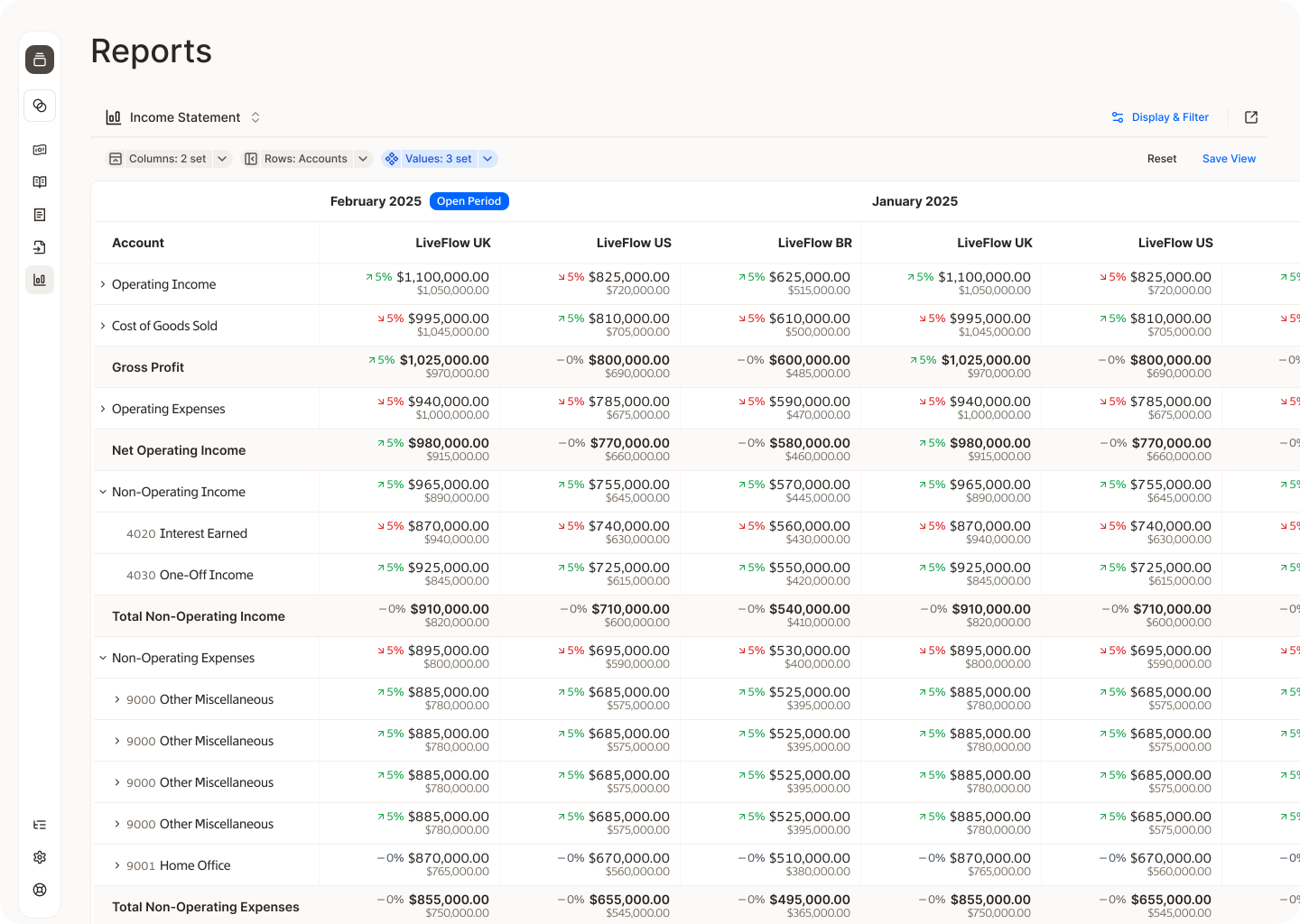
Whether you're managing 2 entities or 200, Flow was built for the complexity that multi-entity finance teams deal with every day. Get real-time visibility across your entire portfolio and drill into any entity instantly. Set rules once and let Flow handle intercompany eliminations automatically. Build consolidated reports your way, so the numbers always tell the correct story.
Fixed assets, prepaids, and amortization schedules are a normal part of running a growing business, and Flow treats them that way. Track and depreciate assets across entities, automate prepaid amortization on a schedule, and let Flow handle the recurring entries so your balance sheet stays accurate without someone manually managing it every close.

Migrate years of data in minutes
Flow's in-house implementation team handles the full migration from start to finish, without third-party consultants, drawn-out timelines, or additional fees. Flow's proprietary integration migrates your complete transactional history, including attachments, so you have full financial context from the moment you go live.

AI that learns how your team works
AI agents handle your most time-consuming work: suggesting account codes, matching transactions, flagging outliers, and automating reconciliation with clear documentation built in. Your team reviews and approves before anything is finalized. And because every AI action is logged with comprehensive audit trails and captured user feedback, you always know what happened, why, and when.
Onboarding from people who actually know accounting and finance
Flow's support team is made up of in-house Accounting and Finance specialists who understand your work. Whether you're navigating a complex consolidation or troubleshooting a reconciliation, the right expertise is always a message away.


$0
$$$

What makes Flow different from Sage?
Both Flow and Sage Intacct are built for multi-entity finance, and they compete on many of the same core capabilities. However, Sage Intacct implementation requires third-party consultants, carries significant upfront cost, and can take three months or more before your team is fully operational. Flow's in-house implementation team handles everything from data migration to onboarding without outside consultants or variable fees. Plus, everything is included in one price: FP&A, budgeting, AI workflows, and specialist support. With Sage, many of those capabilities are add-on modules billed separately.
Is Sage Intacct similar to NetSuite?
In many ways, yes. Both are enterprise-grade ERP platforms designed for mid-market and larger organizations, and both come with the implementation complexity and cost that reflects that. Implementations typically require certified third-party partners, take months to complete, and cost as much as your first year of software (or more). If your business has outgrown QuickBooks Online and needs real multi-entity accounting capability, both are options worth evaluating. Flow is built for exactly that same transition — with the accounting depth to compete with either platform and the implementation experience that neither offers.
How much does Sage Intacct cost per year?
Sage Intacct doesn't publish fixed pricing, but based on publicly available information, annual subscription costs typically start at around $25,000 and scale with the number of users, modules, and entities. That number doesn't include implementation, which typically runs 1.0–1.5x your first-year subscription — meaning total first-year costs often range from $50,000 to $75,000 or more, depending on complexity. Advanced capabilities such as FP&A, budgeting, and higher-tier consolidation are sold as separate modules at an additional cost. Flow's pricing is all-inclusive, with a $0 implementation fee and no module marketplace.
Which is better, Sage Intacct or QuickBooks?
It depends on where your business is. QuickBooks works well at a certain scale, but multi-entity consolidation, intercompany eliminations, and dimensional reporting quickly push it to its limits. Sage Intacct was built for that complexity — but it's designed for organizations with the budget, timeline, and IT resources for a full ERP implementation. Flow sits in the middle, by design. You get the accounting depth your business needs as it scales — multi-entity consolidation, intercompany transactions, automated eliminations, FP&A, and AI-powered workflows — without the implementation overhead, consultant dependency, or module pricing that comes with a platform like Sage.
How long does implementation on Flow actually take?
Most customers are live on the platform within a week. Flow's in-house implementation team handles the entire process, from data migration to your first close, with no third-party consultants, drawn-out timelines, or variable implementation fees.
Does Flow include FP&A, or is that a separate cost?
FP&A is included. Budgeting, forecasting, variance analysis, and reporting are all part of the platform.
Is Flow's support actually in-house?
Yes. Flow's support team is made up of in-house accounting and finance specialists. Whether you're navigating a complex consolidation or troubleshooting a reconciliation, you're talking to someone who understands what you're working on.
What does Flow's pricing include?
Everything. Multi-entity support, FP&A, AI workflows, intercompany eliminations, white-glove implementation, full transactional data migration, and ongoing specialist support are all included.
Does Flow have hidden fees or add-ons?
No. Flow doesn't have a module marketplace or tiered feature gates. What you see is what you get, without unlocking, upgrading, or paying a consultant to configure what should already work out of the box.
Do I need to hire a consultant to get started with Flow?
No. Unlike most ERP implementations, Flow doesn't require outside consultants to get you up and running. Our in-house team manages the full implementation from start to finish, and ongoing support is included.
What does Flow’s "white-glove implementation" include?
White-glove implementation means a dedicated team handles your full setup – data migration, configuration, and onboarding – so you don't have to figure it out on your own. After implementation, Flow's in-house Finance specialists are available whenever you need them to help you get the most out of the platform.
What data gets migrated to Flow?
Unlike many ERPs, Flow migrates your full transactional history. There's no limit on how far back we can go, so you have complete financial context from your very first day on the platform.
Can Flow handle the same audit trail requirements as Sage Intacct?
Yes. Flow maintains comprehensive audit logs across all transactions and AI activity, so your team always has a complete, traceable record of what happened, when, and who approved it. Every AI action is logged, and user feedback on AI outputs is captured and flagged for review when needed.