Imagine starting your day with a complete picture of your business before your second cup of coffee. Not a PDF someone compiled last night or a spreadsheet you're not sure is up to date. The actual numbers for every entity, account, and currency right now, with context. And when a question comes up in your afternoon leadership meeting, you answer immediately and confidently, rather than saying, "I'll follow up by EOD."
That's not a fantasy. That's the world finance leaders work in today, with modern ERPs.
Key Takeaways
Legacy vs. Modern: Traditional ERPs are reactive and manual, while modern platforms are proactive and real-time.
The "Close" Crisis: Nearly 50% of organizations take more than 6 days to close their books due to manual data stitching.
AI Integration: AI-native ERPs like Flow unify accounting and finance, reducing manual errors through automated classification.
Continuous Close: Modern systems enable a "continuous close" process, allowing finance teams to focus on strategy rather than reconciliation.
Strategic Impact: CFOs using AI automation project a 24% improvement in forecast accuracy by 2027.
For many Finance leaders at growing companies, that version of the job feels distant. Instead, the day looks more like this: logging in and out of separate systems for each entity, manually pulling and stitching together reports, chasing down approvals over email, and spending the last week of every month in a close process that somehow always takes longer than it should.
If that sounds familiar, it's worth asking: is it the work that's hard or the tools?
A brief history of a long headache

ERP systems have been around longer than most of us have been in finance. The category traces back to the 1960s, when manufacturers built software to manage inventory and production. By the 1990s, those systems had evolved into full-scale Enterprise Resource Planning platforms – sprawling, powerful, and designed for large enterprises with IT departments to match.
Then came the cloud. In the late 1990s and early 2000s, ERP vendors began offering hosted, subscription-based versions of their platforms. Finance teams embraced these tools as a serious step up from spreadsheets.
The problem is that "step up" and "built for you" are two very different things.
Why legacy ERPs hold you back
Systems considered sophisticated enough to manage the operations of global enterprises are, in many cases, not well-suited to the financial complexity of a growing mid-market company in 2026.
Legacy ERPs were architected for a different era. One in which overnight batch processing was acceptable, IT handled report customization, and the month-end close was treated as an event rather than as a process that could run continuously. Back then, Finance wasn't expected to move fast – it was expected to be airtight. Manual controls were extensive and built in: compliance through manual oversight, a human reviewing every entry, reconciliation, and approval. It wasn’t a bottleneck; it was the point.
Legacy ERPs were built for a reactive finance function that records what happened, reports on it weeks later, and calls that good enough. The result? Many Finance teams operating on legacy systems spend their days fighting the very tools that are supposed to help them. This shows up in many frustrating ways.
Manual oversight that compounds instead of reduces. Every exception, reconciliation discrepancy, and intercompany transaction gets handed to a human to sort out. Not because the work requires human judgment, but because the system doesn't support automated logic sophisticated enough to handle it.
Data you're not sure you can trust. When the source of truth is manual input, every number carries an asterisk. Finance teams spend as much time validating data as they do analyzing it.
Silos that make simple questions hard. Multi-entity finance teams often have to log out of one entity's environment and log into another just to compare numbers. Consolidating reports involves pulling exports from multiple sources and assembling them manually. By the time the consolidated view exists, it's already slightly stale.
Slow, reactive insight. When your financial picture is assembled at the end of the period, you're always managing in retrospect. You find out there was a margin problem after the quarter closes, or identify a cash shortfall when it's already arrived.
And then there's the month-end close. In a legacy ERP, it's less a process and more a gauntlet.
Timeline | Activity |
|---|---|
Days 1-3 | Chasing receipts and approvals |
Days 4-7 | Manual entity consolidation |
Days 8-10 | Reconciling errors and discrepancies |
Day 11+ | Final reporting and analysis |
It's not an outlier experience. Ventana Research's 2023 Smart Financial Close study found that nearly half of organizations still can't complete their monthly close within six business days. And if an error surfaces once the reports are ready, it's back to the beginning: chase, consolidate, reconcile, repeat.
The worst part isn't any single problem. It's that after a while, you stop noticing them. You build workarounds. You hire around the gaps. You start to think this is just what finance feels like. But really, it's just what this tool feels like.
In the old way, a reactive finance function asks: "What happened?"
What finance looks like on a modern ERP
A proactive finance function asks: "What should we do about it?"
Modern ERPs were designed around a fundamentally different set of assumptions:
Finance should be real-time rather than periodic.
Insight should live inside the platform, not in exports sent to other tools.
Automation should handle routine tasks so humans can focus on decision-making and strategy.
The result is a finance function that's proactive by design, not reactive by default. That's exactly why Flow, an AI-native ERP that unifies Accounting and Finance together in one place, was built. Here's what that actually unlocks.
You see every number in real time
A unified financial data model means your GL, sub-ledgers, and reporting all draw from the same source. No reconciliation between your "system number" and your "real number," because they're the same number.
Your data is clean by design
Automated classification, AI-driven matching, and system-enforced rules mean far less manual input and far fewer manual errors. The trust you put in the numbers is earned by the process, not by how carefully someone checked their work.
FP&A lives inside the same system
Modern platforms embed analytics, forecasting, and scenario modeling directly into the transaction environment. Your team can drill from a top-line KPI to a line-item detail without leaving the system — and they can model the impact of a pricing change, a demand shift, or an FX swing on live data, not a two-week-old export.
Workflows move as fast as your business
Approvals, routing, and exception handling are built into the platform. No more approval chains over email or wondering if someone read a Slack message.
Complex consolidation questions get instant answers
Multi-entity consolidations that used to take hours of stitching now happen in real time. Need to know your cash position right now? It's there. Need an intercompany view across five subsidiaries? Already done.
Your close runs continuously
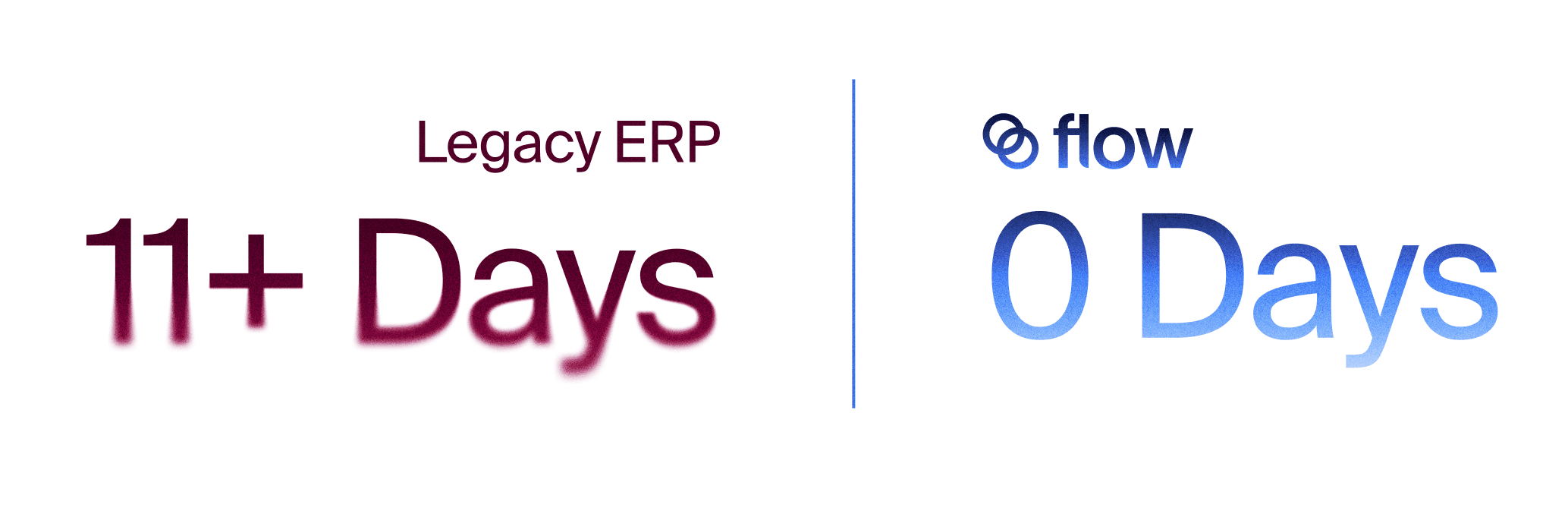
Month 1 ends and Month 2 begins, minus the chaos and panic. Intercompany eliminations, currency translations, and consolidation adjustments run as part of the platform, not as a separate project at month-end. Automated rules handle the high-volume, low-judgment entries, and exceptions surface for review. Your team gets to focus on strategic priorities on Day 1, not Day 11.
The shift isn't theoretical. According to IBM's Institute for Business Value, CFOs projecting AI adoption expect:
24% improvement in forecast accuracy
23% improvement in continuous close processes by 2027
The question to ask before you switch
There's a real question worth raising: is switching worth it?
For companies that have been on the same system for a decade, the answer isn't obvious. There's institutional knowledge embedded in your current setup, with processes built around its quirks and workarounds.
But there's a cost to staying. Every month you spend in a reactive close is a month you're not getting ahead. When questions take three days to answer, leadership is making decisions without the full picture. Every hour your best people spend reconciling is an hour they're not spending on the analysis that actually moves the business.
The question isn't "What features are needed?" or “Does the current system work?” It's “What kind of finance function do we want to be?"
With a modern ERP, the CFO opens a dashboard at 3 p.m. and sees how this morning's pricing decision has already moved gross margin. In a legacy stack, that same insight arrives next week…maybe.
The difference is more than speed. It's whether finance leads or lags the business. That's the shift a modern ERP makes possible. And it's exactly what Flow was designed to deliver. Book a demo to see for yourself.
Frequently asked questions
What is a legacy ERP?
A legacy ERP is a finance and operations system built on outdated architecture (typically on-premises or hosted on a private server), and designed for an era when overnight batch processing and manual oversight were the standard. These systems were never built for real-time data, multi-entity complexity, or cloud integrations. Most legacy ERPs were designed in the 1990s and early 2000s for large enterprises with dedicated IT departments. Mid-market companies running on them today are often using tools built for a business model that no longer exists.
How do I know if my ERP has become a legacy system?
The clearest sign your ERP has become a legacy system is when it creates more work than it eliminates. Finance teams on legacy ERPs typically export data to spreadsheets for basic analysis, spend the last week of every month in manual reconciliations, and wait days for reports to refresh. Other signals: adding a new entity or currency requires custom development, and your vendor ships security patches but not meaningful new features. According to Ventana Research's 2023 Smart Financial Close study, nearly half of organizations still can't complete their monthly close in under six business days, a direct result of the manual stitching that legacy systems require.
What risks come with staying on a legacy ERP?
Staying on a legacy ERP carries compounding risks that rarely show up on the P&L until they're already expensive. Finance teams spend significant time validating data instead of analyzing it. Decisions get made on stale information because insights are assembled after the period closes, not during it. Multi-entity businesses face additional complexity: separate environments for each entity, manual consolidation exports, and reconciliation treated as a month-end project rather than a continuous process.
How long does migrating from a legacy ERP to a modern one typically take?
For most mid-market companies, a full ERP migration takes three to nine months — longer for multi-entity organizations with customized workflows, intercompany structures, and multiple currencies. A phased approach reduces cut-over risk and lets teams see value before the migration is complete. Implementation timeline is one of the most common objections finance leaders raise when evaluating a switch. Flow ERP was designed with this in mind: most implementations take weeks.
When should I adopt AI-native ERP?
The right time to adopt an AI-native ERP is when your team spends more time reconciling data than acting on it. The clearest signals: closed cycles stretching beyond six days, reports that require manual assembly across entities, and headcount added to work around the system rather than run the business. For mid-market companies with multiple entities, that inflection point tends to arrive sooner than expected.
—
About LiveFlow
LiveFlow builds AI-native finance software for growing, multi-entity businesses. LiveFlow offers two products. Flow ERP is an AI-native ERP designed for multi-entity physical businesses, including franchise, construction, healthcare, food and beverage, and multi-location retail. It is the only AI-native ERP that unifies the general ledger, AP/AR, and FP&A in a single platform, with built-in accounting agents that automate manual work. LiveFlow FP&A automates financial consolidation, reporting, and budgeting on top of existing accounting software such as QuickBooks and Xero.